- AtlasMoth Newsletter
- Posts
- Do Users Still Love You?
Do Users Still Love You?
Retention hacks for SaaS

In partnership with

AI-native CRM

“When I first opened Attio, I instantly got the feeling this was the next generation of CRM.”
— Margaret Shen, Head of GTM at Modal
Attio is the AI-native CRM for modern teams. With automatic enrichment, call intelligence, AI agents, flexible workflows and more, Attio works for any business and only takes minutes to set up.
Join industry leaders like Granola, Taskrabbit, Flatfile and more.
Hey, it’s Kushagra. Welcome to this week’s AtlasMoth drop.
Product-market fit used to be a milestone. Now it’s a moving target.
Every quarter feels like a pop quiz: “Do users still love you?”
And lately, many great products are failing that test.
AI isn’t just changing how people work; it’s changing what they expect from products altogether.
Features that once felt magical now feel... meh.
And when that happens, retention starts to slip. Quietly at first. Then fast.
This week, we’re zooming out on what I call the era of product-market fit collapse, why it’s happening, what it means for design, and how to rebuild retention before it’s too late.
💬 Building for people beyond borders? Book a call to explore more
Vibing While DesigningThis track gave me a serious boost—check out ‘Lichtung’ by Dinik Eulberg🎵 |  |
1. Churn is design feedback in disguise
When users leave, they’re not rejecting your pricing page; they’re rejecting your design decisions.
Every onboarding screen, every feature nudge, every interaction that failed to deliver value adds up.
Churn isn’t just data. It’s a design signal.
Most companies treat churn like a metric problem. “Let’s patch payments. Let’s send a ‘We miss you’ email.”
But great teams treat churn like usability testing, just on a larger scale.
When churn rises, it means the experience has stopped aligning with expectation.
And that’s a design gap, not a marketing one.

User chrun journey
2. Activation isn’t set up
Most churn starts long before cancellation.
It starts when the activation is defined wrong.
A lot of teams think activation ends when setup ends: import, upload, configure, done.
But that’s activity, not value.
Real activation happens when users actually feel an impact.
Verbs matter here: publish, send, share, deploy, receive.
SurveyMonkey: not when you create a survey, but when you get responses.
Miro: Not when you open a board when you collaborate on it.
Lovable: not when you build an app, but when you launch and see traffic.
That’s your “aha.”
And if that moment doesn’t land?
Retention never will.
3. Feature adoption = Habit loops
Even after activation, users churn when they never find the features that matter most to them.
They technically “get started,” but never get hooked.
That’s why feature discovery is a design problem too.
Not enough visibility? You’ve built bloat.
Too much? You’ve built noise.
The balance comes from two views:
Top-down: Identify the 5–10 core features that define your product’s real value.
Bottom-up: Study your most retentive users, see what features they always use.
Overlap them, and you’ll know what to amplify & what to kill.
Every design system should include a feature kill list. It keeps your UX clean, focused, and future-proof.

The habit loop
Introducing the first AI-native CRM

Connect your email, and you’ll instantly get a CRM with enriched customer insights and a platform that grows with your business.
With AI at the core, Attio lets you:
Prospect and route leads with research agents
Get real-time insights during customer calls
Build powerful automations for your complex workflows
Join industry leaders like Granola, Taskrabbit, Flatfile and more.
4. Offboarding is the new onboarding
Voluntary churn (people canceling on purpose) is one of the best places to design better.
Offboarding is not the end. It’s your last chance to show value.
Remind users what they’re losing. Offer pause options. Or pull a Canva show to their projects, brand kits, and invite them to “just take a break” instead of leaving.
Even a single thoughtful interaction here can save 10–15% of at-risk users.
That’s not luck. That’s retention design.

Free email without sacrificing your privacy
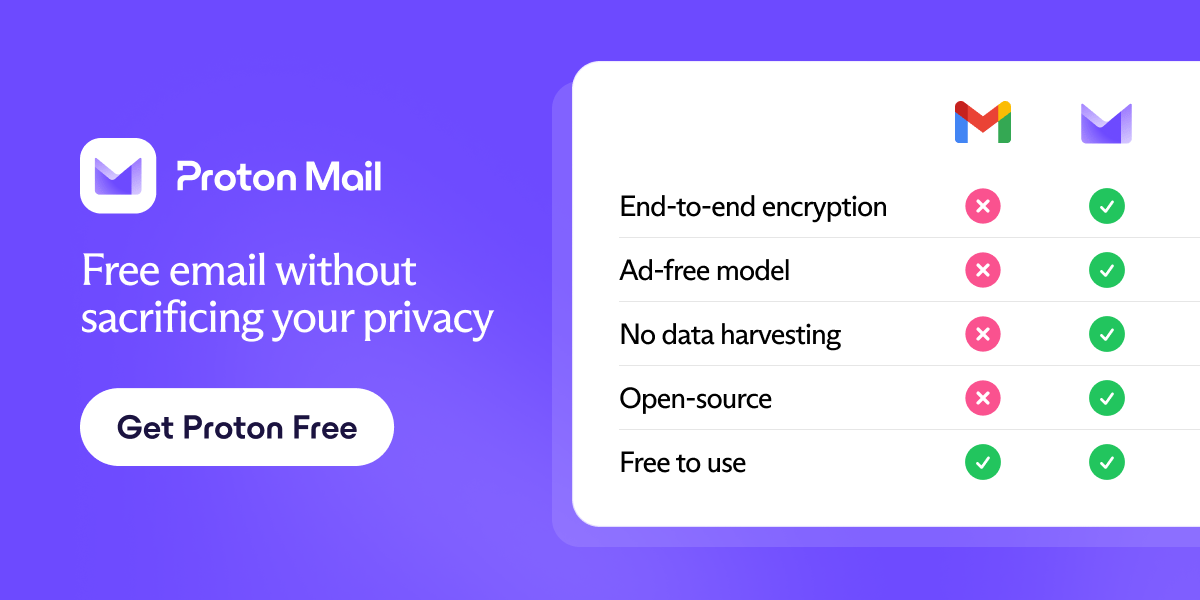
Gmail tracks you. Proton doesn’t. Get private email that puts your data — and your privacy — first.
5. Involuntary churn = invisible leak
The sneakiest churn comes from payment failures, expired cards, bank rejections, and fraud filters.
Most teams don’t design for this moment at all.
But it’s part of the experience.
A user’s payment shouldn’t silently fail; it should feel like a gentle nudge, not a slap.
Tools like Churnkey handle retries, reminders, and recovery flows beautifully, but the principle remains: payment UX is product UX.
30 Minutes Can Save YouGreat design doesn’t happen alone. One session can save you 10+ design iterations later. |  |
6. Resurrection isn’t revival, it’s relevance
Resurrection campaigns fail because they act like nostalgia. “We miss you.” “Come back.”
But people don’t miss you; they just moved on.
If you’ve evolved, show them that.
Highlight new features, redesigned flows, or faster performance.
Segment churned users:
Free-but-active users: Give them a paid trial on your timeline, say, during a new
launch.Inactive users: Use slow-drip storytelling to reframe what the product is now.
It’s not a revival. It’s reframing.

7. Design your retention pod
Retention isn’t one person’s job. It’s a full-stack design problem.
Activation → UX & Growth.
Feature adoption → Product & Data.
Payment recovery → Engineering & Ops.
Resurrection → Lifecycle & Content.
If your org isn’t structured for retention, you’ll keep fighting churn with short-term fixes.
Great teams design retention into their process, not patch it later.
The Takeaway
Retention is the truest test of design.
Because users don’t churn on pricing, they churn on friction.
Every bounce, every “meh” moment, every missed “aha” is a design decision.
The best retention teams don’t guess why users leave. They design why they’ll stay.
So maybe the next time churn ticks up, don’t reach for a new offer.
Reach for your Figma file.
If users need a manual, the design already failed the test. |  |
Reply